Attila Csomos
I make molecules glow.
Chemist at ELTE and BrainVisionCenter in Budapest. I design fluorescent dyes, sensors and photocages that light up living cells under a two-photon microscope.
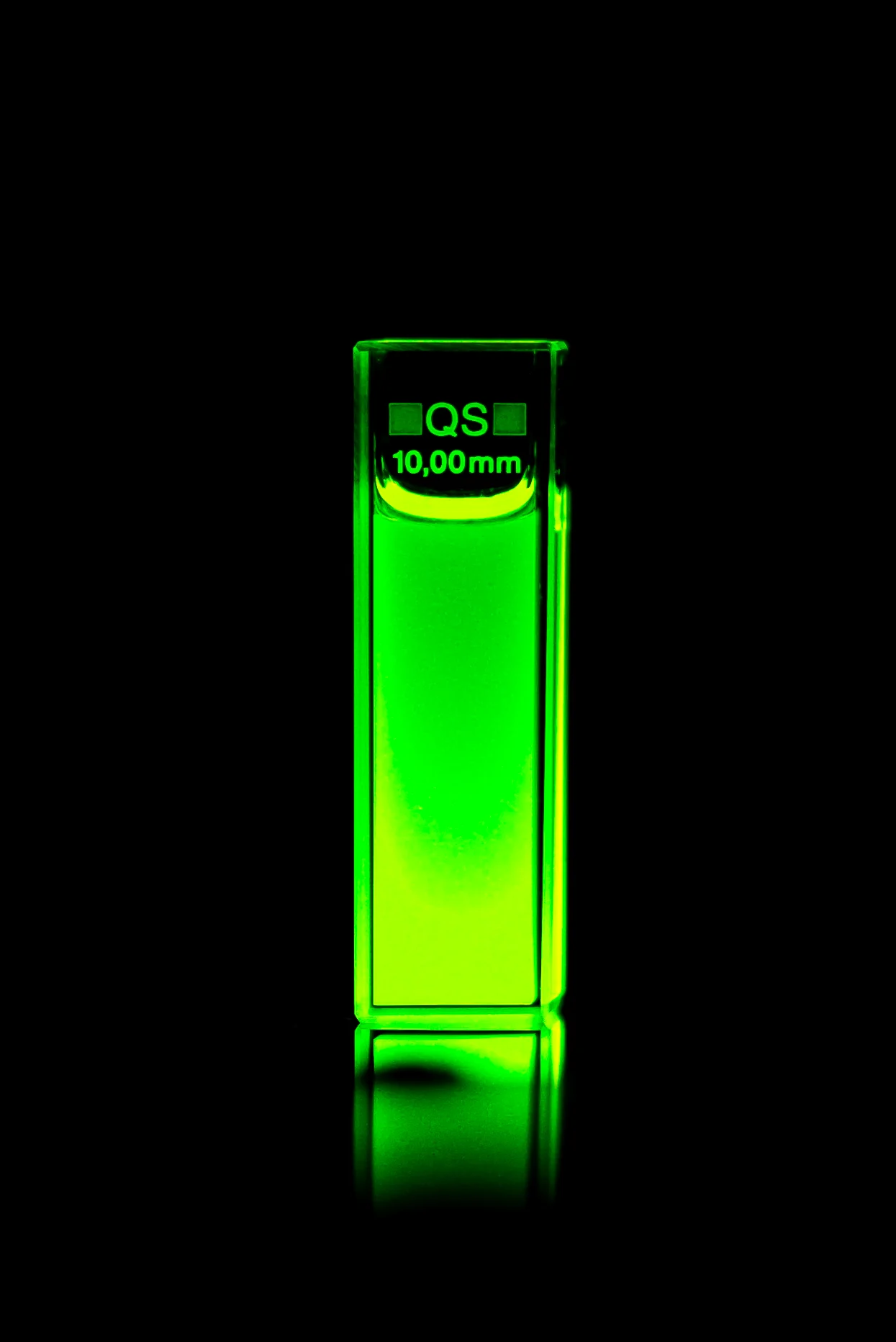
Nature's brightest trick
Inside every green glow is one small molecule.
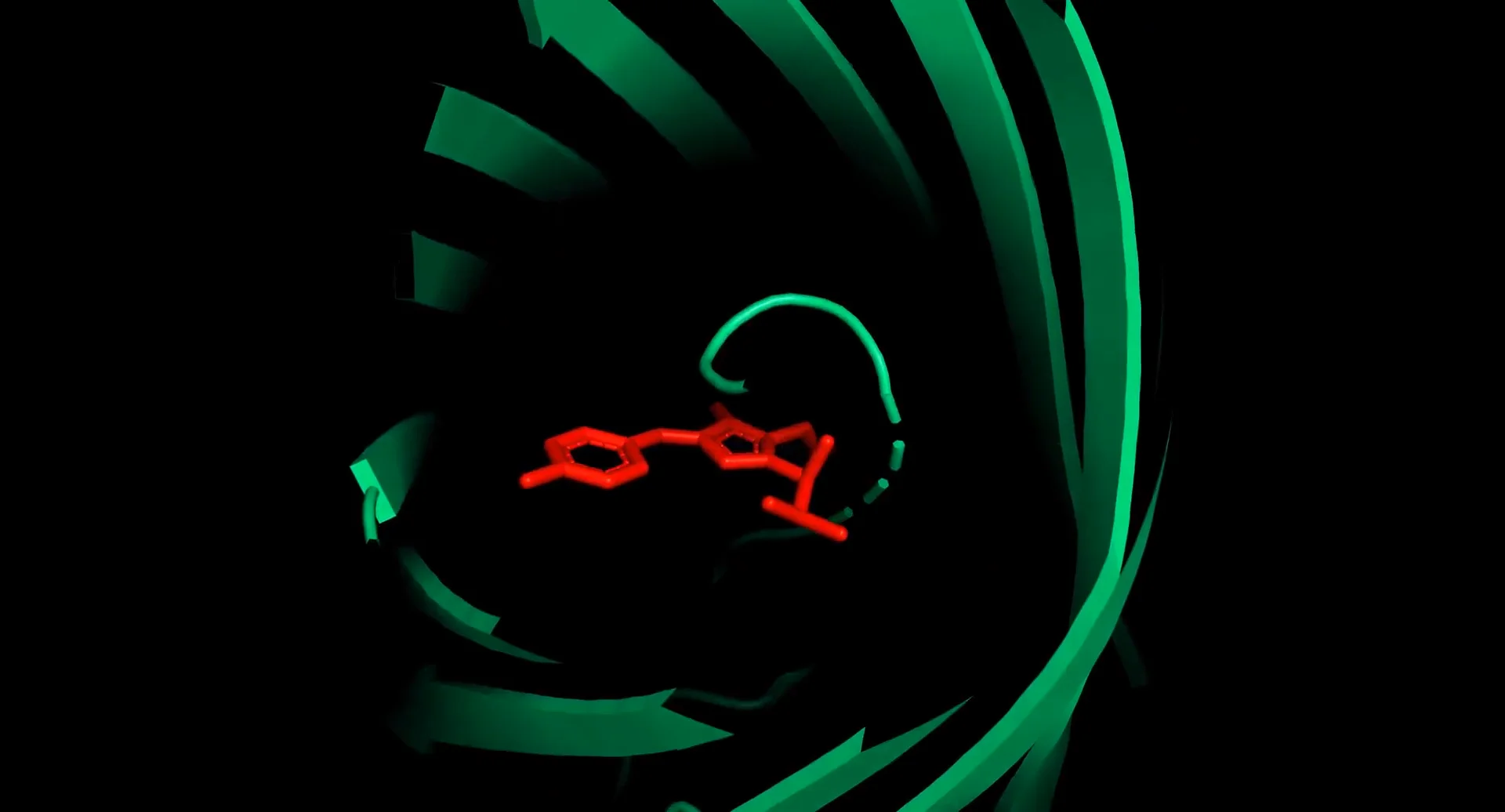
Held
Inside the green fluorescent protein, a barrel of protein holds the chromophore still. It glows.
Free
Taken out of the protein, it twists and spends its energy as heat. It goes dark.
Locked
I rebuild that grip with chemistry, so the molecule shines on its own.
Zinc sensors
Add zinc. Watch it switch on.
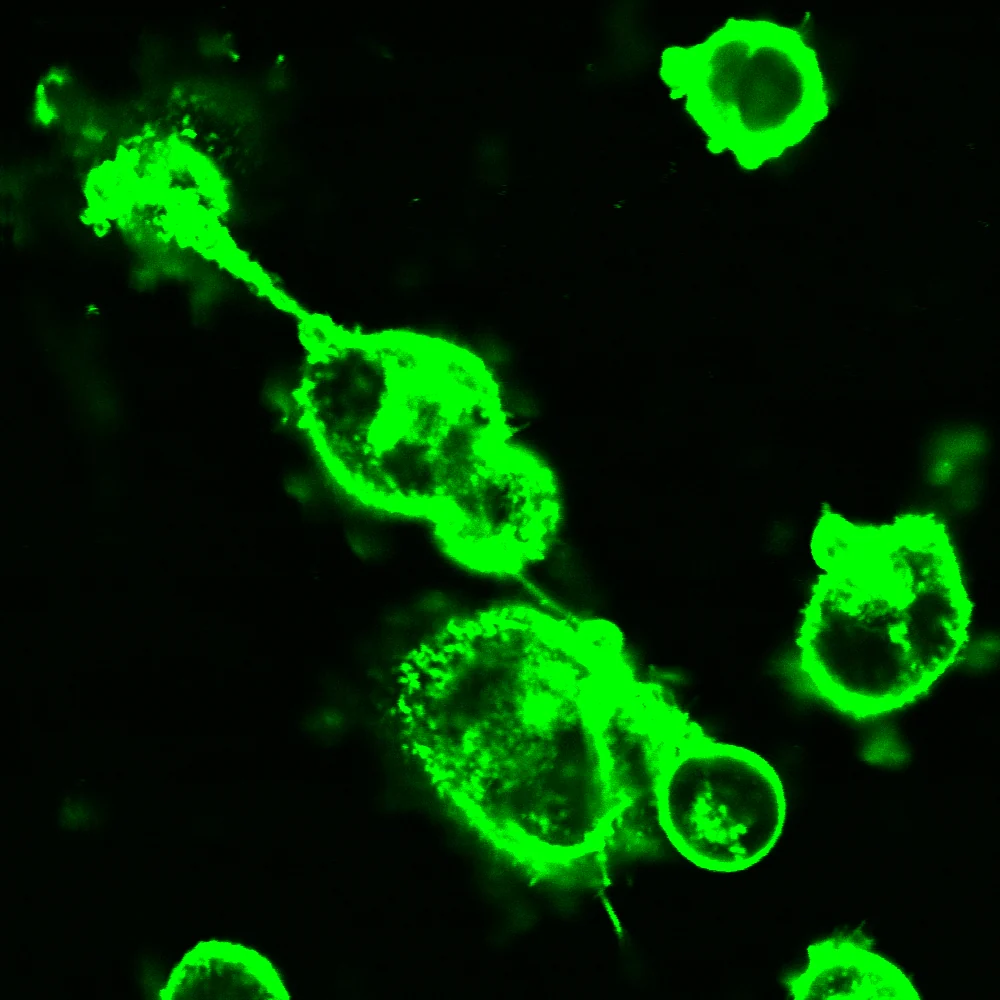
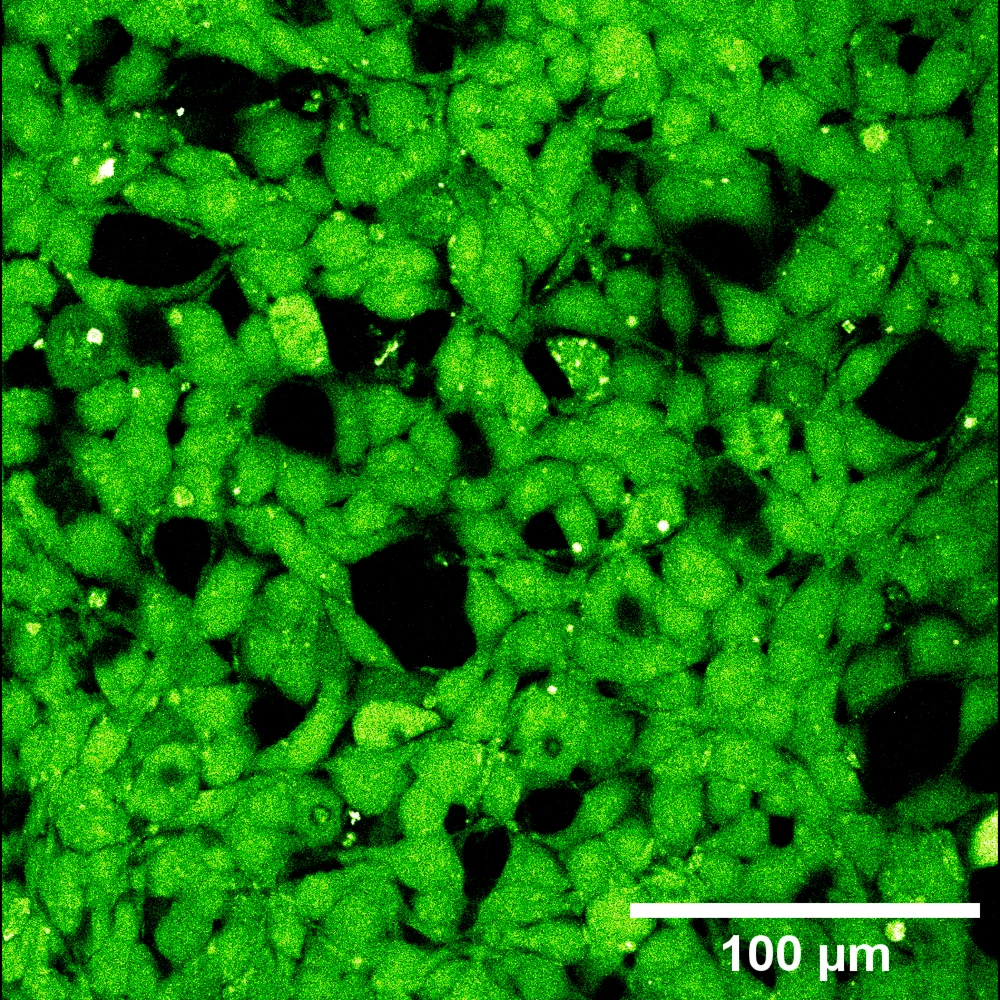
My sensors stay dark until they catch a zinc ion. These living cells light up as zinc is added, and fade again when it is taken away.
- two-photon sensors
- 16
- binding affinity
- nM
- two-photon excitation
- 900 nm
Research
Four projects, all about light.
Three ways to lock a chromophore so that it glows, and one way to let light open a cage.
Project 1 · New fluorophores
Found by accident. Kept on purpose.
A trace side product in a mass spectrum became a new, permanently locked dye family. Bright, green and made for two-photon microscopes, it is the main conceptual advance of my PhD.
- quantum yield, up to
- 0.9
- functional probes
- 4
- Stokes shift
- 58–70 nm
Project 2 · Sensing
Zinc, made visible.
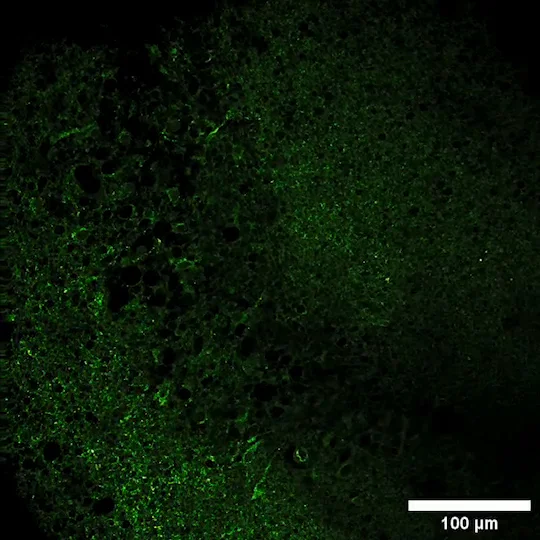
Sensors that stay dark until they catch a zinc ion, then lock into shape and light up. Tested in living cells and in brain slices.
- two-photon sensors
- 16
- tightest binding (K′d)
- 0.2 nM
- competing ions ignored by the best probes
- 10 mM
Project 3 · New fluorophores
A bridge made of boron.
A single boron atom holds the GFP chromophore flat. The result is a new dye family that is simple to make, with an unusually wide gap between absorbed and emitted light.
- new dyes
- 10
- Stokes shift, up to
- 100 nm
- best quantum yield
- 0.63
Project 4 · Photochemistry · with UCLA
One flash, four hundred molecules.
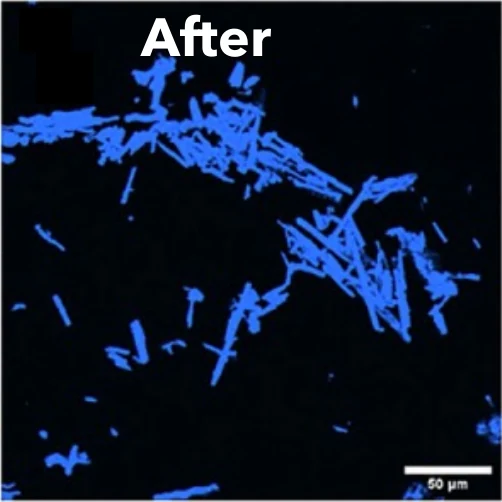
A crystalline photocage where one two-photon excitation sets off a chain reaction. Up to 400 fluorescent molecules are released, enough for 3D imaging and patterning.
Φ ≈ 400
molecules per absorbed photon
1–5 µm
3D resolution
690–770 nm
two-photon trigger