Project 3 of 4 · New fluorophores

A bridge made of boron.

Holding the GFP chromophore flat with a single boron atom gives a new family of dyes: simple to make, with an unusually wide gap between the light they absorb and the light they emit.

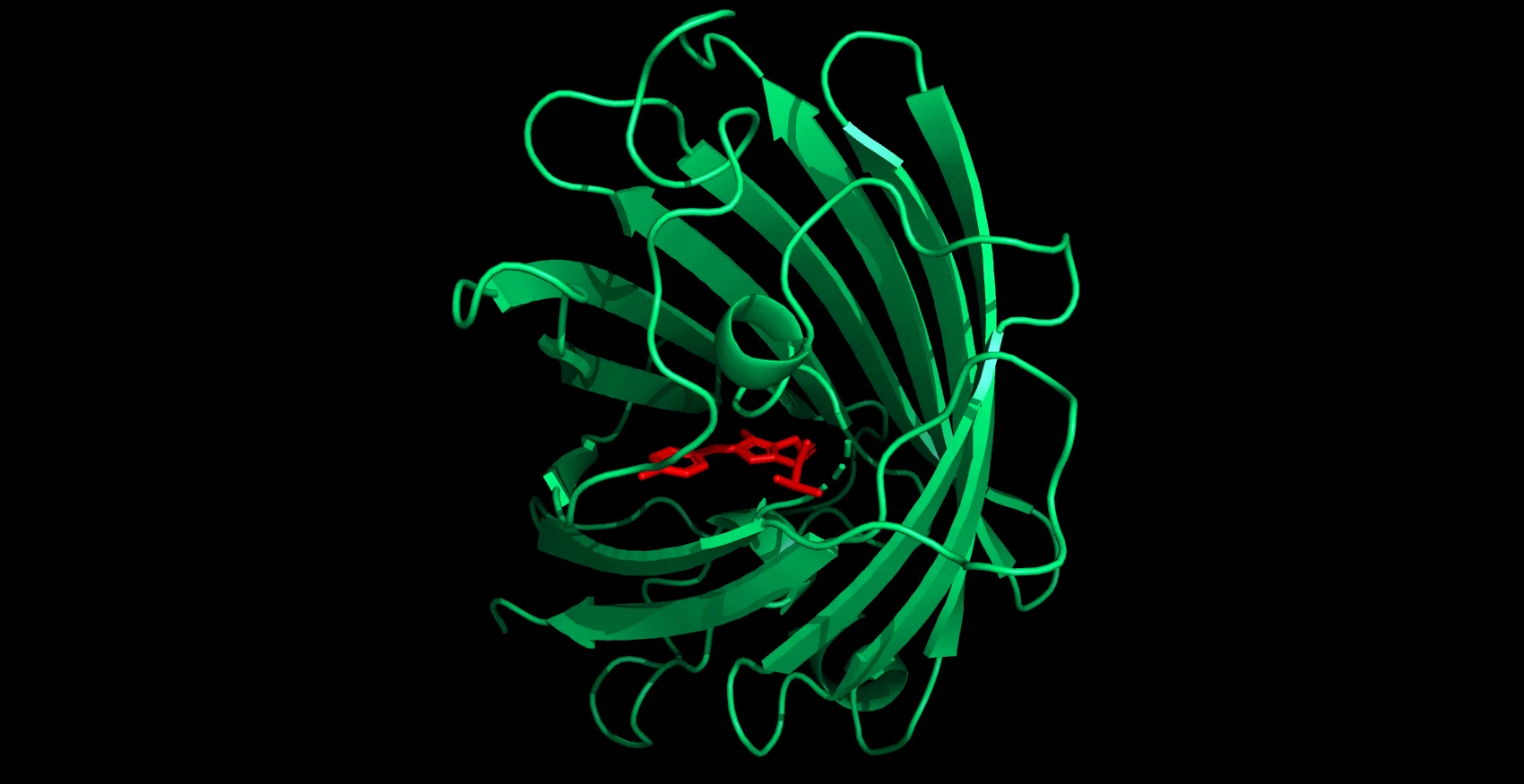
GFP protein barrel surrounding its chromophore

Why it matters

Bright, but hard to make.

Bridging the GFP chromophore with a BF₂ group was already known to make it strongly fluorescent (Wu and Burgess, 2008). Those dyes behave much like the familiar BODIPYs, but they are difficult to synthesize.

A different boron chemistry, first used for azaborine dyes (Saint-Louis and co-workers, 2016), offered a shortcut: a B–OH bridge built from boronic acids.

The approach

One atom, one lock.

We adapted the B–OH bridging reaction to GFP chromophore analogues. The boron atom ties the chromophore into a rigid, fused ring system that is structurally distinct from BODIPY.

  1. 1

    Build

    Start from 2-formylphenylboronic acids, about ten of which are easy to obtain.

  2. 2

    Bridge

    The boron atom closes a new ring and holds the chromophore flat.

  3. 3

    Tune

    Substituents move absorption from 370 to 425 nm and emission from 408 to 525 nm.

Spec sheet

New dyes characterized10 (photophysics in DMSO)
Absorption maxima370–425 nm
Emission maxima408–525 nm
Stokes shiftup to 100 nm
Quantum yield (Φ)up to 0.63
Brightness (ε×Φ)up to 10 000 M⁻¹ cm⁻¹
Zinc probesrespond in the millimolar range (K′d ≈ 10⁻³ M), six orders of magnitude above classic dipicolylamine sensors, opening a higher concentration window
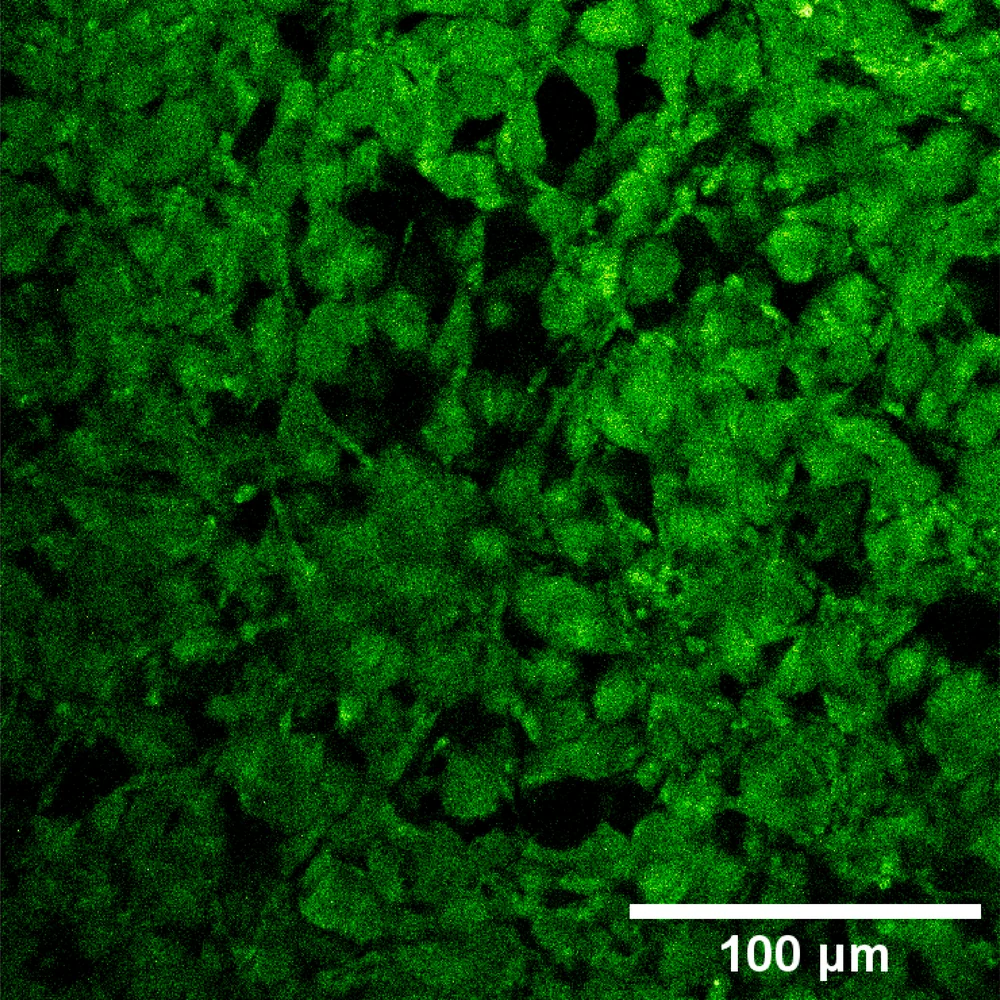
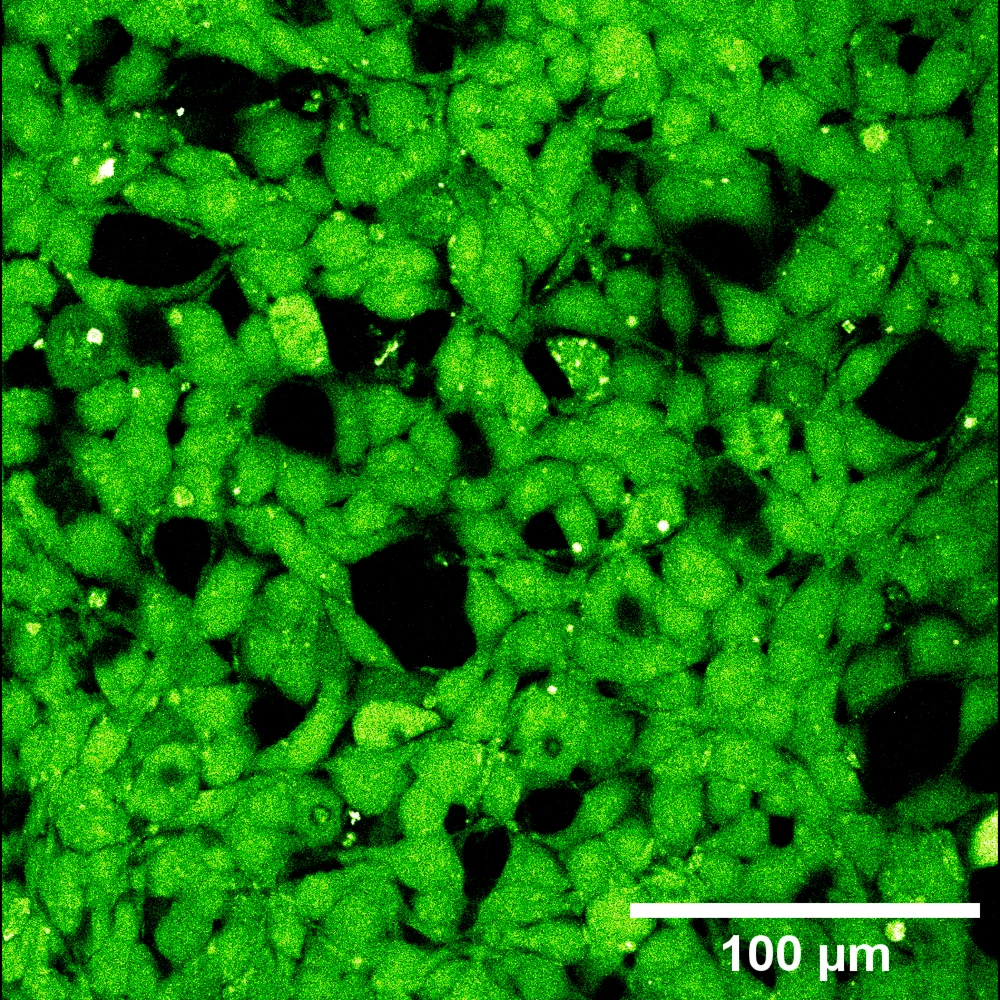
In cellsbrighter HEK-293 cells with Zn²⁺, quenched again by the chelator TPEN; two-photon response confirmed

In the microscope

HEK-293 cells stained with a boron-bridged zinc probe, before Zn²⁺. Scale bar 100 µm.
The same field after Zn²⁺ is added. Scale bar 100 µm.

With Brigitta Petrilla, whose MSc work on this project won 1st prize at the BME TDK and 2nd prize at the national OTDK.

Papers

A. Csomos, B. Petrilla, L. Cseri, G. Turczel, A. Steckel, A. Matuscsák, G. Schlosser, B. J. Rózsa, E. Kovács, Z. Mucsi

Introducing Rigidity into the GFP Chromophore via a Boron Bridge: Insights and Application in Two-Photon Imaging

Org. Lett. · 2025 · 27(13), 3128–3133

Patent HUP2000417A1

Patent